Posts

Book celebrates love of New Zealand’s native plants

Image
New Zealanders talk about their love of native plants Politicians, artists, academics, farmers, business people - growing numbers of New Zealanders are committed to a passionate love affair with native plants. This collection of 44 personal narratives is sumptuously illustrated by photographs by John Maillard, who travelled from Invercargill to Auckland to bring to life contributors’ garden stories. Contributors include Peri Drysdale, Jeanette Fitzsimons, Tim Shadbolt, Steven Tindall, and a host of conservationists and gardeners esteemed in their locales. A richly illustrated celebration of New Zealanders and their passion for native plants has been published by Canterbury University Press. Living with Natives, edited by Professor Ian Spellerberg from Lincoln University and Napier-based environmental and planning consultant Michele Frey, is a collection of 44 moving and informative narratives by people of all ages and from all walks of life who talk about their love of, and experienc...
New Zealand and photography

New Zealand and photography are strange bed fellows. The history of this remote country is about survival and making do. New Zealand went through a period of unusual home made left wing politics, that made it hard to import any item not made in part, in country. That led to the Kiwi make do attitude, which of course is the same in many countries around the world. The man in the shed making do, is reflected in Britain and other places. Unfortunately the idea has gone a bit far here in New Zealand. In my exhibition I had a perfectly reasonable and intelligent man who came in a few times to view a picture. He then went to the same location to recreated the photograph. Yep lots do that, but to do it repeatedly and still wonder why the result is not the same as mine, surly would lead a person to ponder, that it takes more then a location and camera to make a good photograph. What I think is missing is the realization that education and immersion into the context, both culturally and histori...

The Lemon tree

Image
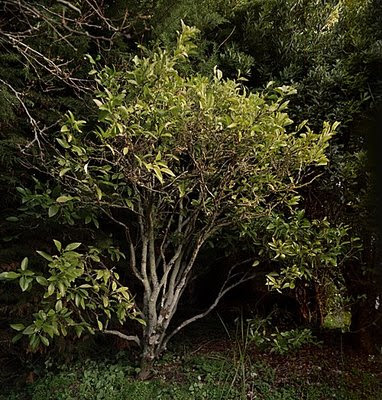
This is the lemon tree in my garden, just to test out the fantastically expensive software for the Scanning back. I had to get this version from Denmark, so it will run on Mac Os X, though not on an intell machine. Saves me trying to run OS 9.x and process the 700 megabyte files. I hope I don't have to spend anymore on an upgrade. Most companies upgrade software for their products for free as Operating systems change, not the Danes. Thank god I don't have to buy a Danish car, the engine would be an extra. Toyo View field 5x4, with a Calter 65mm f4 lens, 300 plus megapixal Danish scanning back.

Cheviot Hills

Image
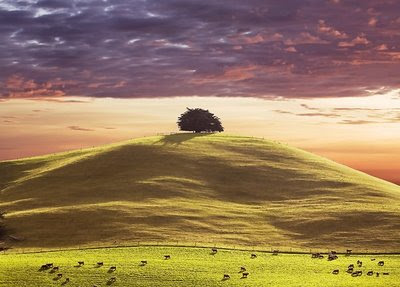
Its been a while. The scanning back is almost ready, I purchased a good 65mm f 4.5 Calter lens, as a gift to myself for the print sales at Tony's Two Rivers Gallery (thanks Tony). I have had very little time to work on my images. On Monday had a portrait request for Lady Diana Isaac so had an opportunity to processes my other images at the same time. This is the first of the next batch, its a real indication of the change of land use in Canterbury. Those are cows not sheep and the sky reminds us were we are in Canterbury. I don't think there is anywere else in the world that has clouds like this.

Testing the Phase One fx Scanning back.

Image
This is not going to be scientific, as the light changes but I want to know the best settings for this back, I may not have to use iso 100, it may be fine at 400 iso or 800 iso. I am also unsure what happens when you set the film curve as it is not reflected in the curve on the right of the screen. I have taken a lot of images today and will edit this post once I evaluate the images. The day was overcast so the light was even. You will see on the last scan, (it took a whopping 33 minutes). The sun goes down, darkening the image at the bottom. First shot unprocessed at medium resolution, that is 22.22 cm x 26.67 cm at 300 Pixels per inch, 23.6 MB. 75mm Lens set at f8 ( I put the lens in upside down and lifted the front and managed to clear the bed of the camera). The back was set at 30th of a second and the exposure indicator was on the left of the green area, indicating slight underexposure. Film curve was set to "Linear". Other options are film curve natural black, black and...

John Blakemoore

I found this site with a taped interview with John Blakemoore http://www.lensculture.com/blakemore.html I remember in the 1980s seeing his work for the first time, it looked wonderful, just like the work of Wyn Bullock.

Next Day on Sugar Loaf

Image
I missed the light today, I was on the wrong side of the Port Hills. I stopped at the sign of the Kiwi and did a quick run up Sugar loaf. After much flapping around and negotiating joggers, I managed to get one image. I took three images, one at 16 minuets exposure, the clouds looked amazing with scanner distortion. I got a contorted jogger in another, the first image was best. Bringing a book helped me wait for the image to scan. I love the distortion in the grass. Here is a close up of the grass before I have removed the colour shift . You can see the 3 colour split from the (Sony?) tri linear array, and have a taste of the resolution. Thanks for the tips on software and Macs.