Posts

Image
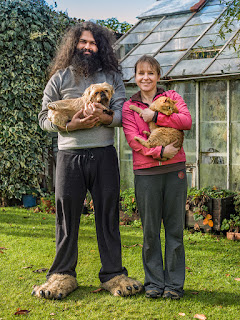
Lifestylers an Exhibition, Opening at 3:30pm on Sunday 9 August 2015       The Chamber Gallery 141 Percival Street, Rangiora, New Zealand New Zealand has a unique type of person who is not characterised by class, race, creed or financial status. These people are from a variety of backgrounds that reflects a New Zealand ideal, which sadly is rapidly being forgotten and ignored. Not all of these people own a lifestyle block, not all of them own the land they stand on, but all have a connection with the land, from subsistence farming to painters of the land. These are people who have a connection with the Land irrespective of their background. Normally very private hidden behind hedges and fences, they have consented to being part of this project. I sent out a letter posted by hand and on social media asking for people to take part I this project, and have had a large number of replies. The following exhibition is part of this ongoing project. In thi...

Mark Laita social commentary through Juxtaposition

Image
http://thesocietypages.org/socimages/2011/02/21/social-commentary-through-juxtaposition-the-work-of-mark-laita/ Mark Laita social commentary through Juxtaposition

I have moved my blog to my new gallery, the Waihora

Image
I have moved my blog to my new gallery, the Waihora gallery and studio. http://waihora-gallery.com/#filter=.blog This is my studio space and gallery, open once a week at the moment. Visitors can work with me to improve their landscape skills, take part in photographers walks, or just look and purchase my work. I will keep blogging, but this is my last post on blogger...I think.

Walking the Milford and Mindfulness

Image
From the BBC  http://www.bbc.com/news/magazine-27186709 A number of recent books have lauded the connection between walking - just for its own sake - and thinking. But are people losing their love of the purposeless walk? Walking is a luxury in the West. Very few people, particularly in cities, are obliged to do much of it at all. Cars, bicycles, buses, trams, and trains all beckon. Instead, walking for any distance is usually a planned leisure activity. Or a health aid. Something to help people lose weight. Or keep their fitness. But there's something else people get from choosing to walk. A place to think. Wordsworth was a walker. His work is inextricably bound up with tramping in the Lake District. Drinking in the stark beauty. Getting lost in his thoughts "As a single footstep will not make a path on the earth, so a single thought will not make a pathway in the mind. To make a deep physical path, we walk again and again. To make a deep mental path, w...
Image
Salvia divinorum is a psychoactive plant which can induce dissociative effects and is a potent producer of "visions" and other hallucinatory experiences.
Image
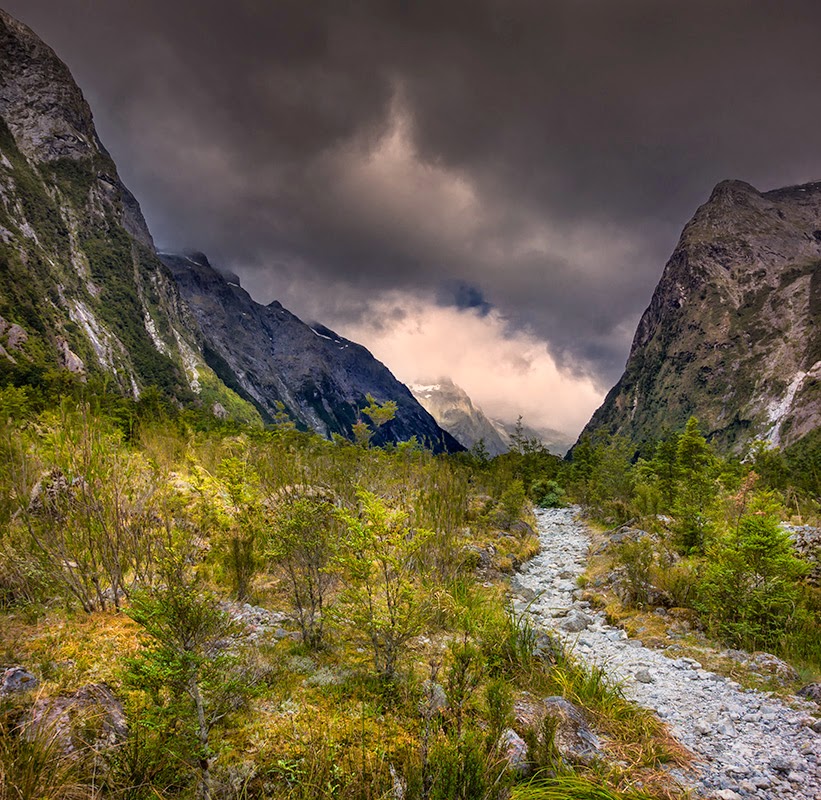
2014 New Zealand Landscape Calendar out now. (7 photos) A selection of the thirteen images from the Calendar below. http://johnmaillard.com/New_Zealand_Landscapes-server/viewcategory.php?groupid=24 Only $30.00 nz $10.00pp in NZ, $30.00pp World Wide. A3 on high quality paper, with NZ dates and public holidays. Only 200 hundred printed, each one can be signed on request.  

What if

What if I could be photographed with my father in 1979, and yet be photographed with my daughter and son at the same time. Behind us could be my grandfathers and their grandfathers, the same with my grandmothers. We could all sit together and share a meal after the photographer has photographed himself.

Ritualistic boundaries, fences, ditch and causeways.

Image
The transition from hunting to farming was most likely managed and executed by women, who discovered that fences protected the crops. This is a true social and cultural change of a magnitude that hasn’t occurred since. Hunting and gathering, to land ownership and crop production for survival, the intervention of spirituality and religion to help, encourage, grow food and build society. The role of magical/spiritual ceremonial landmarks, fences, causeways that would mark the growth of food and the cycle of the seasons. The birth of astrology and astronomy to catalog and understand the turn of time. The use of lines, ditches and causeways to change the fundamental understanding of the world, the ownership and delegation of land and the symbolic use of a boundary. All of these things were inhabited by spirits and gods. Our understanding of the world was profoundly different, we cannot imaging that world, as we have almost no historical context. ...

Why Photographers Should Never Give Clients All The Photos

If you are making a living from photography, chances are some of your clients have requested all the photos from a shoot or an event, depending on the case. It is a common occurrence that I believe is due largely to a misunderstanding that people have in our work. Some photographers give in and offer all the photographs, the ones straight out of the camera, unedited. Let me assure you, this is a mistake and I will explain why. Continued at: http://www.photographytalk.com/photography-articles/3158-why-a-photographer-should-never-give-a-client-all-the-photos 

A Bridge built in 1963

Image
1963

Crossing

Image
Crossing Ashly Gorge Crossing in snow

Last week the snow came

Image
Snow and Lines

As my house stays damaged

Image
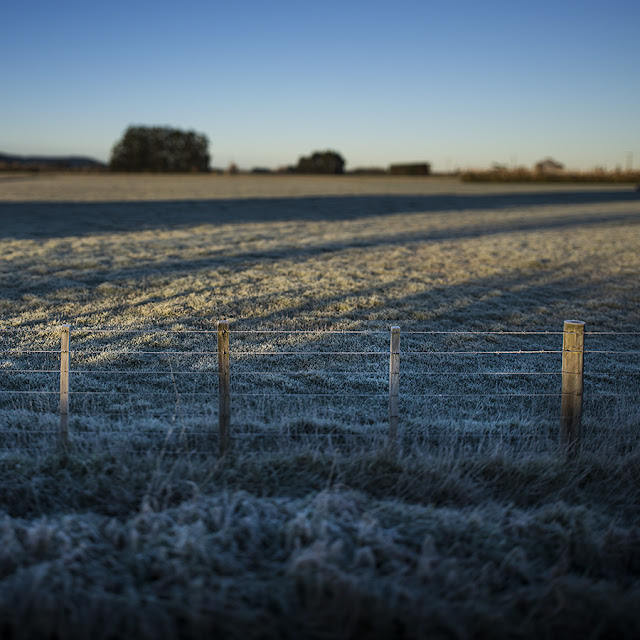
As my house stays damaged, I photograph Ditches and Hedges. Ditch Hedge

Fence Line

Image
Fence Line, Tai Tapu

In Canterbury

Image
 In Canterbury, the land is being submerged in water, why? The Bag

What Is Spec Work And Why Is It Bad for Photographers?

What Is Spec Work And Why Is It Bad for Photographers? http://petapixel.com/2013/06/26/what-is-spec-work-and-why-is-it-bad/

Reframing the land

Image
Currently I am working on Rural landscape My overall aim is to produce a body of photographic work, which represents an alternative to the widely published views of New Zealand as a ‘scenic wonderland.’ These by and large hark back to the traditions of the sublime in Western art and are more often than not designed to conjure up notions of a New Zealand as an unspoiled wilderness. I want to use my photographic practice, as well as my personal experiences of specific New Zealand places, to produce an alternative canon of New Zealand landscape photography which i consider beautiful.  This will include an acknowledgement of the link between a place and the community, which lives there. Flood due poor drainage on a development in the port hills I am interested in fractal design in the landscape. Working from the idea that there is no longer a nature that is unchanged from its natural form by humanity, the form has been manipulated by humanity to conform to a pattern....

Something lurks in the otherwise pristine landscape

Image
Image
Sumner Beach in the morning

CHANGING THE COLOR OF BLUEPRINTS

Image
Here is another article from my old site "Shadowland". Fred Endsley CHANGING THE COLOR OF BLUEPRINTS "Probably the most significant problem in the use of the blueprint, though, is a psychological rather than a chemical one. We find that we are working against a cultural or conventional color bias: the blueprint is simply too blue. Reasonably neutral black seems to be an ideal, but another 'photographic color', Such as brown, would apparently be more acceptable than blue." - Reginald Heron, Blueprint Into Blackprint Afterimage, Dec. 1973, Volume 1, Number 3 Although the blue blueprint is the most stable and highly tonal form, there is still a groundswell away from its graphic blueness, especially among those intent upon using high-contrast, low-detail yielding transparencies. For those who find the blue distasteful, and for experimentalists, here are several processes for changing the blue into another, more "pleasing" colo...